[For some reason, my previous blog post, a criticism of the recent ban by some rabbis on renting and selling homes to non-Jews in Israel, did npt appear on some RSS feeds. Here it is.]
By now, everyone knows about the terrible Chillul Hashem caused by Heidi and Mendy on The People's Court. The explanation offered in VINis plausible and may absolve them, in the eyes of man if not the judge, of attempting to take the cleaners to the cleaners. For what it's worth, I believe the VIN write-up and give Heidi and Mendy the benefit of the doubt. It's important to keep in mind that "The People's Court" is not actually a court of law. The litigants agree to appear before the "judge" as a binding arbitrator. It is also worth recalling that the point of the show, like any show, is to provide entertainment.The judge's tirade at the end was certainly entertaining, whether or not it was just.
I still fault Heidi and Mendy for two things: the first is appearing on the show in the first place, as has been noted by many. The second is appearing wearing the wig she was wearing. In hindsight, it's easy to see how wearing a clearly expensive wig could cast aspersions on the whole story. From a tactical point of view, it probably would have won more points had she been wearing a kerchief of some sort.
Lest one argue that it is inappropriate to wear a kerchief to court, well, this is America of the 21st century, and folks can (and should) wear whatever they want on their heads as a religious expression. Don't believe me? Well, one rebbetzin wore a kerchief to the White House Hannukah party. Meet Rabbi Uri and Dahlia Topolosky of New Orleans (full disclosure: they're friends of ours; and he's a UMD alum - go Terps!):
Showing posts with label Chanukah. Show all posts
Showing posts with label Chanukah. Show all posts
12/11/2010


12/08/2010
News Round-Up
- I will weigh in on the rabbinic ban on leasing homes to gentiles in Israel within the next day. Until them, look at this.
- Adam Kirsch reviews a new anthology of Middle Eastern literature and criticizes it, inter alia, for not including any Hebrew literature. Based on what I wrote in my review of Sabato (which Kisch missed in his review of the same), he probably would have been a near-ideal author to include. And he's Egyptian-Israeli. Too bad.
- Some Egyptians are blaming Jews for shark attacks.

- Over 300 people attended our annual Kabbalat Shabbat Hannukah at the ancient synagogue at Umm al-Umdan, including the city councilman in charge of tourism and heritage sites. Last year there were about 150. One day soon, Shabbat Chanukah in Modiin will be a "thing to do."
- I had a post planned entitled "the top 8 Chanukah songs besides the Maccabeats, Matisyahu, and Adam Sandler. Then DovBear came and did that and more (I had Lehrer, Stewart/Colbert, South Park, Hannukah Harry, and Oy Chanukah) - but he missed some good ones. Here they are:
- The LeeVeees: How do you Spell Hannukah?
Fountainheads: I Gotta Feeling Hannukah
Peter Paul and Mary: Light one Candle for the Maccabee Children
Peter Paul and Mary: Light one Candle for the Maccabee Children
12/02/2010
Topsy-Turvy World: On Hannukah, Wikileaks, and Karl Marx's Dreidel
As noted by Benjamin, the dreidel has not fared well in this year's Hannukah news cycle. Howard Jacobson and Marc Tracy justifiably call it a lame game, developing a trope implied by Jon Stewart in a (hilarious) video from last year. Attempts to parlay the lame toy into something cooler, like a Guiness record (note - I was a participant in the event a few years ago when UMD set the record), or invest it with symbolic meaning, end up being the exceptions that prove the rule. The game is inherently boring and skill-less.
And yet.
One of the more interesting symbolisms ascribed to the dreidel is articulated by R. Nachman of Breslov and appears in Sichot Ha-Ran #40, part of a critique of medieval cosmology. Translation appears in Tormented Master , p. 309):
The thrust of this passage is a critique of Platonic essentialism, a critique that is echoed in a famous passage from Karl Marx (I developed this comparison a few years ago, in a Hannukah post):
We have been treated to an astounding example of this instability with the publication of the Wikileaks documents. Overnight, the distinction between enemy and ally became blurred and entire theories and narratives about foreign affairs collapsed like houses of cards, completely and inexorably altering the world's diplomatic landscape. Julian Assange and Benjamin Netanyahu, perhaps there can be no stranger bedfellows (although admittedly R. Nahman and Karl Marx make pretty strange bedfellows), cite each other approvingly.
So keep spinning that dreidel, lest you be caught of guard when the next tremor turns the seemingly solid surface beneath your feet into so much jello - hey, it's a jelly doughnut metaphor, too!
And yet.
One of the more interesting symbolisms ascribed to the dreidel is articulated by R. Nachman of Breslov and appears in Sichot Ha-Ran #40, part of a critique of medieval cosmology. Translation appears in Tormented Master
, p. 309):Their books contain questions as to the order of Creation: How is it that a star merited to be a star, or that a constellation deserved to be a constellation? What was the sin of the lower creatures, animals and all the rest, that consigned them to their lowly state? Why not just the opposite? Why is a head a head and a foot a foot?...
This entire pursuit, however, is a vain one. One should not ask such questions of God, who is righteous and upright. For in truth, the entire universe is a spinning top, which is called a dreidel. Everything moves in a circle: angels change into men and men into angels; the head becomes a foot and the foot a head. All things in the world are part of this circular motion, reborn and transformed into one another. That which was above is lowered and that which was below is raised up. For in their root all of them are one.
The thrust of this passage is a critique of Platonic essentialism, a critique that is echoed in a famous passage from Karl Marx (I developed this comparison a few years ago, in a Hannukah post):
All fixed, fast frozen relations, with their train of ancient and venerable prejudices and opinions, are swept away, all new-formed ones become antiquated before they can ossify. All that is solid melts into air, all that is holy is profaned...More broadly speaking, though, the "lesson" of the dreidel is that we live in a topsy-turvy world in which nothing is solid and stable and fixed. The origin of the dreidel that was told to me in my childhood-that when the evil Greeks came to the study hall to see if the Jews were engaged in the forbidden act of Torah study, these brave and studious Jews put away their books and took out the spinning tops- has itself been turned on its head; now, the Jewish army spies on draft dodgers to make sure they're really studying Torah or keeping Shabbat.
We have been treated to an astounding example of this instability with the publication of the Wikileaks documents. Overnight, the distinction between enemy and ally became blurred and entire theories and narratives about foreign affairs collapsed like houses of cards, completely and inexorably altering the world's diplomatic landscape. Julian Assange and Benjamin Netanyahu, perhaps there can be no stranger bedfellows (although admittedly R. Nahman and Karl Marx make pretty strange bedfellows), cite each other approvingly.
So keep spinning that dreidel, lest you be caught of guard when the next tremor turns the seemingly solid surface beneath your feet into so much jello - hey, it's a jelly doughnut metaphor, too!
12/23/2009
Postcolonial Chanukah
The past couple of years, I discussed the different "Chanukah"s - the different narratives that various segments of the Jewish people read into the holiday of Chanukah. Most are familiar, or at least would sound familiar if you heard it.
This year, two new Chanukah's seem to have been making the rounds.
The first is the David Brooks/ Tony Judt/ Christopher Hitchens/ post-Zionist Chanukah - Chanukah as a celebration of a bloody guerilla war in which a bunch of backward peasants took on their more civilized coreligionists and ultimately an empire before turning into a regime that was no better than the one it replaced. Or something like that.
The second is the Postcolonial Chanukah, in which the struggle of the Hasmoneans against the Seleucids was the struggle of a native culture against a totalizing and colonizing empire. In this version of Chanukah, the Palestinians are today's Maccabees. Edward Said would be proud. Here are a couple of examples:
http://www.huffingtonpost.com/rabbi-michael-lerner/responding-to-hitchens-on_b_392018.html
http://www.tabletmag.com/arts-and-culture/22806/judahs-avatar/
[I wish I could find the article that actually says that the Palestinians are more like Maccabees and the Jews are more like the Greeks in today's conflict. I'll post the link when I find it].
In a variation of this theme, Shai sent over an article by Prof. Moshe Benovitz that argues for a revival of Chanukah in 3rd Century E. Israel after it had not been celebrated for 200 years there. The setting is the brief Palmyrene rule over Palestine and Egypt. It's a wonderful article. I would have said that this reading has anti-imperialist overtones as well (especially the part of lighting the candles specifically to show defiance against the Palmyrene/ Tadmorian/ Tarmodai soldiers), except that the Jews were in fact agitating for a return to Roman rule.
This year, two new Chanukah's seem to have been making the rounds.
The first is the David Brooks/ Tony Judt/ Christopher Hitchens/ post-Zionist Chanukah - Chanukah as a celebration of a bloody guerilla war in which a bunch of backward peasants took on their more civilized coreligionists and ultimately an empire before turning into a regime that was no better than the one it replaced. Or something like that.
The second is the Postcolonial Chanukah, in which the struggle of the Hasmoneans against the Seleucids was the struggle of a native culture against a totalizing and colonizing empire. In this version of Chanukah, the Palestinians are today's Maccabees. Edward Said would be proud. Here are a couple of examples:
http://www.huffingtonpost.com/rabbi-michael-lerner/responding-to-hitchens-on_b_392018.html
http://www.tabletmag.com/arts-and-culture/22806/judahs-avatar/
[I wish I could find the article that actually says that the Palestinians are more like Maccabees and the Jews are more like the Greeks in today's conflict. I'll post the link when I find it].
In a variation of this theme, Shai sent over an article by Prof. Moshe Benovitz that argues for a revival of Chanukah in 3rd Century E. Israel after it had not been celebrated for 200 years there. The setting is the brief Palmyrene rule over Palestine and Egypt. It's a wonderful article. I would have said that this reading has anti-imperialist overtones as well (especially the part of lighting the candles specifically to show defiance against the Palmyrene/ Tadmorian/ Tarmodai soldiers), except that the Jews were in fact agitating for a return to Roman rule.
12/18/2009
12/10/2009
A line I'd add to Adam Sandler's Chanukah Song
Scarlet Johanssen is one great Jewish catch; Utah - we'll trade you Roseanne Barr for Orrin Hatch
1/04/2009
V: The National-Religious Chanukah
As commenter Chardal (ke-shmo kein hu) pointed out, the National-Religious Chanukah is a synthesis of the Chareidi and Zionist Chanukahs. In addition to the writings of R’ Kahane, with which I am not familiar but assume that Chardal is correct, this was written by R. Shlomo Aviner (and translated into English by my colleague and fellow Baltimorean [Go Ravens!] Rafi Blumberg). It sums this approach up pretty well.
I know I’m late, but I still have three to go!
12/28/2008
Ah, Sunday
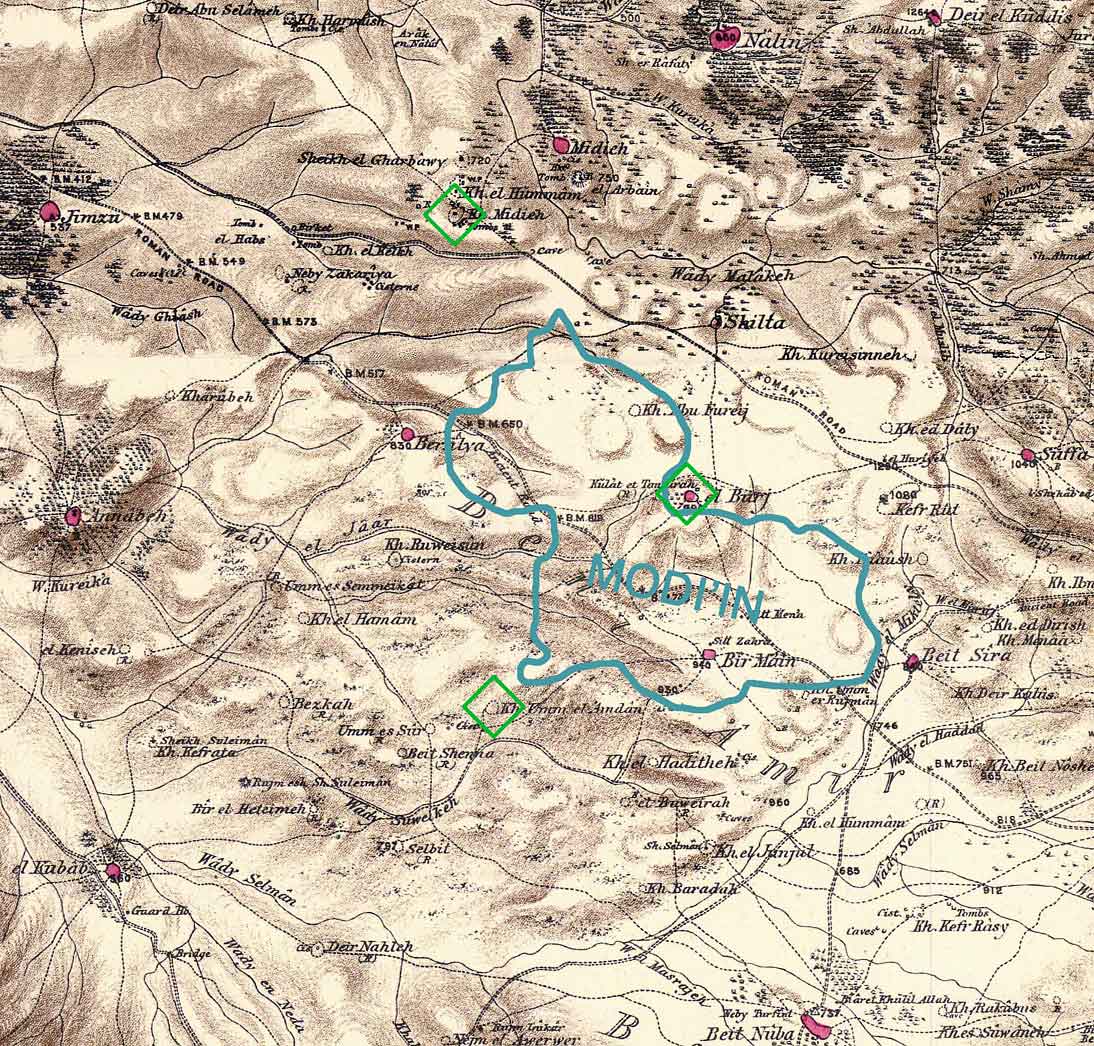
The wife and kids were off today for Chanukah vacation so I took off as well. We woke up late, went on a short hike about a 5 minute drive from our home where we visited the ruins of a Byzantine church and two agricultural villages - one from the Byzantine era and one from more recently (the ruins were about 60 year sold or so). The landmarks can be seen just below the border of modern Modiin on this map - look for Haditheh and Baweirah. We live just at the corner of modern MOdiin, near the box marked Umm al Umdan.
After the excursion, we went to the supermarket to pick up a particular gift that will be presented later tonight, but also treated ourselves to sufganiyot.
Then we went to watch my nephew's Little League baseball game - his team, from Hashmonaim, played against the team from Modiin; the epic Chanukah battle ended in a 9-9 tie.
After we finish bathing and lighting, we will be headed to my folks' home for our annual Chanukah shindig with the extended family.
The night will conclude with that traditional combination of beer and foootball, and I will probably be up late watching the Ravens game (unless the Patriots lose the early game; even if they win, I don't want to hear any Pts fans whining. They had a softball schedule, playing a full 8 games against the AFC and NFC west).
Sundays happen so infrequently here, but when they do present themselves, they are truly enjoyable. So enjoy this happy conflation of Chanukah, Rosh Chodesh, and Sunday!
Kind of makes you forget that a war just started here...
After the excursion, we went to the supermarket to pick up a particular gift that will be presented later tonight, but also treated ourselves to sufganiyot.
Then we went to watch my nephew's Little League baseball game - his team, from Hashmonaim, played against the team from Modiin; the epic Chanukah battle ended in a 9-9 tie.
After we finish bathing and lighting, we will be headed to my folks' home for our annual Chanukah shindig with the extended family.
The night will conclude with that traditional combination of beer and foootball, and I will probably be up late watching the Ravens game (unless the Patriots lose the early game; even if they win, I don't want to hear any Pts fans whining. They had a softball schedule, playing a full 8 games against the AFC and NFC west).
Sundays happen so infrequently here, but when they do present themselves, they are truly enjoyable. So enjoy this happy conflation of Chanukah, Rosh Chodesh, and Sunday!
Kind of makes you forget that a war just started here...
12/27/2008
IV: Chanukah as the Festival of Religious Freedom
This celebration is also characteristic of
The theme of Jewish freedom of worship is certainly present in various midrashim that describe the decrees against the practice of Judaism (Rosh Chodesh, circumcision, Torah study, etc.) and against belief in the God of the Jews (kitvu al keren ha-shor…). It appears in the al ha-nisim paragraph as well (“to make them forget Your Torah and transgress Your beloved commandments”). Other compositions seem to indicate that Judaism was in actual danger of disappearance due to the onslaught of Hellenism. In fact, the entire theme of rededication of the
Of course, the American version tends to superimpose 20th Century American ideas of religious identity and freedom onto the 2nd Century BCE, but hey, we try to keep it warm and fuzzy.
12/24/2008
III: The American Chanukah – Christmas for the Jews
The notion that Chanukah might correspond to the holidays of other cultural traditions is not a new one. The Gemara in Avoda Zarah (2b) speaks of an eight day holiday, Saturnalia, first celebrated by Adam when he noticed that the days had begun to get longer. Indeed, innumerable cultures hold celebrations around the winter solstice, and it is an intuitive annual landmark. In general, Jewish holidays do correspond to the seasons. Sukkot, a harvest festival, is not the same as Thanksgiving or Oktoberfest, but they are rooted in a similar consciousness (see here).
Christmas seems to have originated as the Christianized version of pagan midwinter festivals. Various yuletide customs have been traced (correctly or incorrectly) back to pagan practices. This being the case, an argument can be made (though not an especially compelling one) that Christmas and Chanukah share some lineage.
The historical question is largely beside the point, however. In the American cultural milieu, Christmas became a dominant cultural practice that excluded non-Christians (such as Jews and Chinese, who inevitably began celebrating Christmas together, with the former eating food prepared by the latter). Chanukah, by virtue of its temporal proximity to Christmas, naturally filled that void.
Not all “observances” and customs associated with this syncretistic celebration are as over-the-top as the “Hanukkah bush” or “Hanukkah Harry”. The giving of “Chanukah presents” has penetrated even the more traditional segments of the Jewish community. American gentile culture clearly associates the two holidays since it has adopted the generic “happy holiday” greeting to cover all observances associated with the season. Television commercials with Christian and Jewish symbols appear during the season. The term “Christmakwanzukkah” has come to symbolize this amalgam of various traditions and observances.
There has been a more recent shift in American culture for Jews to take pride in their identity, but this trend nevertheless uses Christmas as the yardstick. To wit: “Instead of one day of presents, we’ve got eight crazy nights”.
12/23/2008
II: The Chareidi Chanukah – Am le-Vadad Yishkon
Last week, my daughter’s chareidi school had a pre-Chanukah party in which the girls performed a number of songs on the holiday theme (or so I was told by my wife, who was allowed to attend; as a man, I was not). The songs were well known selections such as “Baruch Elokeinu she-beranu le-khvodo…” and “Ashreinu mah tov chelkeinu”. The themes of these songs was Jewish isolation and separatism.
I recently read several articles by Dr. Benjamin Brown, including “Rabbi E.M. Shach: Admiration of Spirit, Critique of Nationalism, and Political Involvement”. The thesis of the article is that this type of separatism was a pillar of R’ Shach’s worldview and politics.
Chanukah, in this way of thinking, celebrates the maintenance of the purity of the Jewish/ Torah way of life in the face of prevailing culture. As opposed to the Zionist celebration, which focuses on the external enemy of the Chanukah story, the Chareidi narrative highlights the internal enemies, the Hellenizing Jews, as the primary antagonists (a point which I satirized with an alternative story of the origin of the custom of spinning the dreidl here).
Many of the themes of the holiday lend themselves easily to this approach – small lights in the face of overwhelming darkness, untouched flasks of pure oil, an obligation of the entire household as one, the idea of being surrounded by mitzvot, and the notable midrash that appears in Rashi on the leyning for the last day of Chanukah – “shelcha gedolah mi-shelahem, she-atah meitiv u-madlik et ha-neitrot” (“yours is superior to theirs, for you set up and light the candles”).
In truth, the themes of particularism and universalism have been in tension within Judaism for a very long time – even before the Chanukah story. I do not believe that it is possible to resolve the question of whether Judaism in universal or particularist in favor of one approach or the other. There is no doubt, though, that different groups of Jews have adopted attitudes all along the spectrum. The Chareidi approach strongly tends toward the particularist end of the spectrum. Like the Zionist celebration, this approach picks up on the elements of Chanukah that corroborate its fundamental narrative of radical cultrural/ religious isolationism.
12/22/2008
I: The Israeli Chanukah – A Celebration of Jewish Might
Last year, I wrote a short post about how the Chanukah narrative is shaped by the group celebrating, and that different Jewish groups celebrate, essentially, different Chanukahs.
Three years ago, I wrote a different Dvar Torah on each night of Chanukah (all of them can be viewed under this label, or in the archives for December 2005). This year, I will combine the two elements, and write about a different form of celebration each night.
Early mainstream Zionism adopted Chanukah as a celebration of the victories of a Jewish army. In its vigor to create the “New Jew”, the Zionist movement enlisted every example of a Jewish military hero and celebrated him as a Zionist or proto-Zionist figure. It gave the nascent state and pre-state a sense of continuity and tradition with a distant but glorious and heroic past. This ardor to generate a new Jewish narrative of “strength” is best expressed (and caricatured) in Hazaz’s famous short story, The Sermon (1942):
Jewish history is so dull, so uninteresting. It has no glory or action, no heroes and conquerors, no rulers and masters of their fate, just a collection of wounded, hunted, groaning and wailing wretches always begging for mercy. I would simply forbid teaching our children Jewish history. Why the devil teach them about their ancestors' shame? I would just say to them: `Boys, from the day we were driven out from our land, we've been a people without a history. Class dismissed. Go out and play football!’
This ethos was projected onto the Jewish holiday of Chanukah, and is even reflected in several very popular Israeli folk songs for Chanukah. This first one is the Hebrew rendition of the Yiddish Oy, Chanekeh or English Oh, Chanukah:
,ימי החנוכה חנוכת מקדשנו
בגיל ובשמחה ממלאים את ליבנו
לילה ויום סביבונינו יסוב
.סופגניות נאכל בם לרוב
!האירו ! הדליקו
נרות חנוכה רבים
על הניסים ועל הנפלאות
.אשר חוללו המכבים
,ניצחון המכבים נספר, נזמרה
על האויבים אז ידם כי גברה
ירושלים שבה לתחיה
.עם ישראל עשה תושיה
!האירו ! הדליקו
The key point lies in lines 7-11, which describe the miracles, wonders, and victories wrought by the Macabees. The other example, perhaps even more classic, is entitled Mi Yimalel (Who Can Retell?)
?מי ימלל גבורות ישראל אותם מי ימנה
העם הן בכל דור יקום הגבור גואל
!שמע
בימים ההם בזמן הזה
מכבי מושיע ופודה
ובימינו כל עם ישראל
.יתאחד יקום ויגאל
Here, the Zionist ethos comes to the fore right off the bat: “Who can retell the strengths of
This general transposition is reflected in many other ubiquitous (and therefore barely noticed anymore) elements of Israeli culture.
There is no doubt that this celebration of the Jewish military victory drew from traditional sources. One cannot but help get the feeling, however, that the conclusion of Yudke’s speech in Hazaz’s story underlies this Zionist Chanukah narrative:
Zionism and Judaism are not the same. They are two very different things entirely, maybe even opposed to one another. When a man can no longer be a Jew, he becomes a Zionist.
12/06/2007
Chanukah: A Celebration of...
Classical Zionism: "Jewish Self-determination and Military Prowess"
America - 60s version: "Light"
America - current version: "Religious Freedom"
Chareidim: "The Torah Remaining Pure and Free of Greek Influences"
Rabbis: "Torah she-Baal Peh"
Funny thing is, you can do this with just about any holiday. Welcome to post-ideological religion. Feel free to chat during davening.
12/05/2007
The Greens who Stole Chanukah
There's a campaign to get people to light fewer Chanukah candles to combat global warming. Link
Please. A Chanukah candle less per family? If I would be convinced that it would actually make a difference, I could hear it; after all, the requirement to light more than one candle per family is only Hidur, and as the Ramchal writes in the chapter of Mesillat Yesharim entitled "Be-mishkal Ha-chasidut", things beyond the letter of the law are to be avoided if they would give the wrong impression to those around. This, however, is absurd. If these bozos think that the hole in the ozone layer is the result of kinderlach lighting the cheap wax candles, then they're really dumb.
If I was going to crusade against Jewish pyromania, I would start with Biur Chametz. I go nuts every year when these idiots show up with a few crumbs, a gallon of lighter fluid, and plastic bags that once held chametz. Start with those pyromaniacs who are hiding behind religion; they're no better than any other polluter. I wouldn't mind if Lag B'omer was scaled back as well; it's a disaster waiting to happen. Kids in this country burn anything not nailed to the ground. And again, this is pyromania hiding behind Judaism.
But that's not really the point, is it? The point is that these people who are calling for less candles are just a bunch of misguided bozos who take aim at something just because it's prominent and helps them grind their axes about religion adjusting to the paradigm of global warming, blah, blah,blah. Maybe they should go after Yad Vashem next for using so many darn yahrzeit candles.
11/15/2007
Clarification Regarding Charedi Women as Teachers
I want to clarify my position on Chareidi women as educators. I do not think that all, or even most, Chareidi women are good teachers. I also do not think that there are no good teachers outside the Chareidi system. I also do not think that there is nothing to worry about in giving one's kids a Charedi education.
There are really two points. The first is that I am very happy with my daughter's school. She is getting a good, well-rounded education, has excellent, professional teachers, and a nice group of kids in her relatively small class. The administration is generally receptive to the parents and willing to talk to them. Earlier this week, her class went on a Rosh Chodesh tiyul (day trip) to the Bamba factory.
I realize (as I mentioned in the previous post) that this is not indicative of Charedi education. This is education under Chareidi auspices. I do not think it an accident that schools in Israel that are under Chareidi auspices but are geared for the general public are generally considered to be excellent schools. I do believe that there is a good talent pool of Chareidi educators, especially women, which is deeper, pound-for-pound, than the pool in other sectors of Israeli society. I should point out that my other kids have has Chareidi women as teachers in nursery schools funded and run by the municipality. They are not just populating the faculties of Chareidi schools. I wonder if, given the choice, these women would prefer to work outside the Charedi sector. I wonder what the difference in pay is. The answers might be interesting - that the best Charedi women teachers teach outside the Chareidi sector. A point for speculation.
With regard to the 'dangers' of educating my kid in an environment like that, I am simply not worried. Speaking only for my own family, it will be very, very long time before my kids have teachers who know more Torah than their parents. It is extremely unlikely that they will adopt a different value-system because they think that their parents' is not serious or rooted in Torah. Furthermore, the norm remains for kids, after a few years of experimentation one way or the other, to remain fairly close to their parents ideologically, and for that matter religiously and practically as well. If the family provides a stable and comfortable environment, kids will GENERALLY not move too far away from what they know and love. There are, of course, exceptions.
A final point pertains to the different systems of education. I've written before how I think a broad but frum personality develops. It does not happen by simultaneously developing the 'Torah' and 'Madda' parts of the brain, so to speak. It does not happen by trying to turn kids on to Torah AND Geography AND Literature AND Physics and so forth. It happens when there is a deeply-rooted love for Torah out of which everything else develops (and yes, it can develop that way). The Menorah, symbol of Jewish wisdom, highlight this - it has a central column out of which all other branches stem. Yet, it's all made from the same piece of metal. To my mind, that symbolizes the relationship and also the chronological process of the absorption of both Torah and what we'll call 'that other valuable stuff'. I think that there's plenty of time in high school or college for our kids to become angst-ridden and conflicted about matters of Torah and whatever else. Let them learn to love Torah first, though. It is certainly important that they learn other things as well, but I don't care if my kids doesn't love math.
I'm not saying that only Chareidi schools imbue a love of Torah. I am saying that I would not write a local Chareidi school off just because it's Chareidi, and that often it is the best option available.
3/01/2007
Go Miracle!
I also like the team name. It’s rooted in Modiin’s ancient history. We also could have been the Oilers or Maccabees (though there are enough Maccabi teams around). The Petah Tikva Pioneers are a good team name as well. The rest pretty much stink, but only for lack of imagination. I mean, Samson lived in or near Beit Shemesh. He was a pretty good athlete. What’s wrong with the Beit Shemesh Jawbones? David killed Goliath a few minutes drive from Beit Shemesh, in Emek Ha-Ela. Why not the Fighting Davids of Beit Shemesh? Doesn’t every underdog always look to David for inspiration? Or how about the Suns? It works for
The other three host cities – Ra’anana, Netanya, and Tel Aviv – will have a harder time, since they are newer cities. Typical names (Express, Tigers, and Lightning, respectively) are to be expected, but not necessarily welcome. Some imagination can be used – maybe the Tel of Tel Aviv representing a pitcher’s mound or something?
The teams from Modiin and Beit Shemesh will share a home field in Gimzo. That invites the question, in what sense are the teams from Modiin and Beit Shemesh? Maybe we should be the Gimzo Gizmos (and the team motto should be ‘It’s All Good’).
As it turns out, I even know one of the players. It was this guy’s counselor at a sports camp in
In other local sports news, it seems that Tamir Goodman is averaging almost 20ppg for the nearby Maccabi Shoham (link). Maybe I’ll get to catch a game at some point. Remember, I made Aliyah from
12/16/2006
The Old will be Renewed, and the New will be Sanctified: A Tale of Chanukah
The above quote, from Rav Kook, describes how I felt this past Friday night. As I’ve mentioned before, a very ancient synagogue was unearthed about a five-minute walk from my home. It is set amidst the ruins of what is the most likely candidate for the Hasmonean-era town of Modiin
Last night, the first night of Chanukah, we held a Carlebach-style Kabbalat Shabbat in the area adjacent to the fenced-off ruins. I was still feeling to sick to absorb the full impact, though it was still powerful, but many others were speaking of goose bumps and very strong emotions.
The initiative was mine, but it wasn’t much. I sent out some emails and did some word-of-mouth promotion, but it revealed a groundswell of sentiment that was just beneath the surface, waiting to be drawn out. There were probably about 50 of us, men, women, and children, down at the ruins. I can’t say what everyone took away from there, but I took away that our new super-modern ‘city of the future’ must remain aware of its ancient roots.
The impoverished of my people will place their hopes in you, and thus we will rebuild a city upon its ruins
12/05/2006
Reb Shlomo Would be Proud
Hat Tip to Yenem's Velt
and check out this one, too. The Rebbetzin points out that the crowd in this latter one looks Israeli.
And for a final, hilarious video, check this out. The Pres' ultimate point is similar to the one I made here.
8/10/2006
A Tu B'Av Night's Dream
I don’t want to restate everything that Ari wrote in his excellent post, but I think he missed some crucial elements in explaining its origins.
The Jewish Calendar year, like several others, is based upon three independent variables: the sun, the moon, and the vegetative cycle. Holidays will generally be located in reference to at least two, if not all, of these variables. Additionally, there is a trend toward ‘shoehorning’ lunar phenomena into solar ones, if for nothing but convention.
For example, Pesach begins at the full-moon – a lunar phenomenon, after the vernal equinox – a solar phenomenon, and if it had been determined that the rains had ended and the barley harvest ready to begin – a vegetative phenomenon (though linked to the solar year).
The solar year is punctuated by two major phenomena, subdivided into four, and then eight days which are naturally predisposed to being holidays. The first two are the solstices, the equinoxes are the midpoints between the solstices and also identifiable in their own right, and the four midpoints between the solstices and equinoxes. Most major ancient holidays are based on these subdivisions; it’s not an invention of modern Wiccans and neo-Pagans.
It is convenient to use these solar phenomena and holidays to mark the beginning, middle, or end of a (generally vegetative) season. Thus, in the Gregorian Calendar, we use the equinoxes and solstices to mark the beginning of each season. In other calendar systems, they were used to mark the midpoint of a season. Thus, as is familiar from Shakespeare and Tolkien, the ‘Midsummer’ holiday actually takes place at the time of the summer solstice, on or around June 21. The Chinese and Japanese calendars follow this type of system as well. In those systems, the midpoints between the solstices and equinoxes are the dates upon which the seasons begin or end.
In the Jewish Calendar, since months are lunar, no dates ever exactly correspond to solar phenomena on a consistent basis. Nevertheless, a lunar date can roughly correspond to a solar phenomenon. Thus, the four seasons (tekufot) are named for the months during which they generally begin – Tishrei, Tevet, Nissan, and Tammuz. In a two-season year, such as the one that the Mishnah uses (the ‘rainy’ season and the ‘sunny’ season), those seasons would start at the equinoxes and reach their midpoints at the solstices. The Biblical festivals are, without exception, determined by the occurrence of the equinoxes.
Another aspect of ancient lunar or lunisolar calendars is the tendency to have holidays at full moons. There’s light, it’s easy to identify, and the moon rises as the sun sets. Also, if the month begins with the moon’s first appearance, it allows for the timing of the holiday to be announced, as there was generally some uncertainty associated with the timing of the moon’s first appearance. That’s why Rosh Hashana, the lone Biblical holiday which is indeterminate even after the day begins, is observed for two days everywhere.
In the standard Jewish calendar, therefore, there are four ‘yemei tekufah’ – equinoxes and solstices – which VERY ROUGHLY correspond to the first days of the month of Tishrei, Tevet, Nissan, and Tammuz. Of those dates, three of the four are commemorated as significant dates (the First of Tevet always corresponds with Chanukah; see also Avodah Zarah 2a, which describes the origins of Saturnalia. 1 Nissan is the beginning of the year in most Biblical accountings, and see Mishna Rosh Hashana 1:1). Furthermore, Pesach and Sukkot are also rooted in the turning of the season around the time of the equinoxes, but begin at the full moon.
There also are four ‘midseason’ dates, each of which occurs on a full moon (since they lie 1.5 months after the beginning of the season). They are: 15 Cheshvan, 15 Shevat, 15 Iyar, and 15 Av. Once again, three of the four are significant dates on the Jewish calendar (15th of Iyar is ‘Pesach Sheni’). The 15th of Shevat is recognized as the midpoint of the winter, much as Groundhog’s Day is recognized as such in America. The 15th of Av would be recognized as the midpoint of the summer, or ‘Midsummer Day’ when the season begins at the equinox. The Celtic festival of Lammas or Lughnasadh corresponds to Tu B’Av. In the Mediterranean, it would have been linked to something related to agricultural cycles, in this case, the beginning of the grape-harvest.
Since the Jewish Calendar is so rooted in the Land of Israel (which we tend to lose sight of outside of the Land), as is the very religious rhythm of the Torah, and since there are natural ‘highlights’ in this rhythm, it’s important to keep those elements in clear vision when trying to understand those holidays.
The Jewish Calendar year, like several others, is based upon three independent variables: the sun, the moon, and the vegetative cycle. Holidays will generally be located in reference to at least two, if not all, of these variables. Additionally, there is a trend toward ‘shoehorning’ lunar phenomena into solar ones, if for nothing but convention.
For example, Pesach begins at the full-moon – a lunar phenomenon, after the vernal equinox – a solar phenomenon, and if it had been determined that the rains had ended and the barley harvest ready to begin – a vegetative phenomenon (though linked to the solar year).
The solar year is punctuated by two major phenomena, subdivided into four, and then eight days which are naturally predisposed to being holidays. The first two are the solstices, the equinoxes are the midpoints between the solstices and also identifiable in their own right, and the four midpoints between the solstices and equinoxes. Most major ancient holidays are based on these subdivisions; it’s not an invention of modern Wiccans and neo-Pagans.
It is convenient to use these solar phenomena and holidays to mark the beginning, middle, or end of a (generally vegetative) season. Thus, in the Gregorian Calendar, we use the equinoxes and solstices to mark the beginning of each season. In other calendar systems, they were used to mark the midpoint of a season. Thus, as is familiar from Shakespeare and Tolkien, the ‘Midsummer’ holiday actually takes place at the time of the summer solstice, on or around June 21. The Chinese and Japanese calendars follow this type of system as well. In those systems, the midpoints between the solstices and equinoxes are the dates upon which the seasons begin or end.
In the Jewish Calendar, since months are lunar, no dates ever exactly correspond to solar phenomena on a consistent basis. Nevertheless, a lunar date can roughly correspond to a solar phenomenon. Thus, the four seasons (tekufot) are named for the months during which they generally begin – Tishrei, Tevet, Nissan, and Tammuz. In a two-season year, such as the one that the Mishnah uses (the ‘rainy’ season and the ‘sunny’ season), those seasons would start at the equinoxes and reach their midpoints at the solstices. The Biblical festivals are, without exception, determined by the occurrence of the equinoxes.
Another aspect of ancient lunar or lunisolar calendars is the tendency to have holidays at full moons. There’s light, it’s easy to identify, and the moon rises as the sun sets. Also, if the month begins with the moon’s first appearance, it allows for the timing of the holiday to be announced, as there was generally some uncertainty associated with the timing of the moon’s first appearance. That’s why Rosh Hashana, the lone Biblical holiday which is indeterminate even after the day begins, is observed for two days everywhere.
In the standard Jewish calendar, therefore, there are four ‘yemei tekufah’ – equinoxes and solstices – which VERY ROUGHLY correspond to the first days of the month of Tishrei, Tevet, Nissan, and Tammuz. Of those dates, three of the four are commemorated as significant dates (the First of Tevet always corresponds with Chanukah; see also Avodah Zarah 2a, which describes the origins of Saturnalia. 1 Nissan is the beginning of the year in most Biblical accountings, and see Mishna Rosh Hashana 1:1). Furthermore, Pesach and Sukkot are also rooted in the turning of the season around the time of the equinoxes, but begin at the full moon.
There also are four ‘midseason’ dates, each of which occurs on a full moon (since they lie 1.5 months after the beginning of the season). They are: 15 Cheshvan, 15 Shevat, 15 Iyar, and 15 Av. Once again, three of the four are significant dates on the Jewish calendar (15th of Iyar is ‘Pesach Sheni’). The 15th of Shevat is recognized as the midpoint of the winter, much as Groundhog’s Day is recognized as such in America. The 15th of Av would be recognized as the midpoint of the summer, or ‘Midsummer Day’ when the season begins at the equinox. The Celtic festival of Lammas or Lughnasadh corresponds to Tu B’Av. In the Mediterranean, it would have been linked to something related to agricultural cycles, in this case, the beginning of the grape-harvest.
Since the Jewish Calendar is so rooted in the Land of Israel (which we tend to lose sight of outside of the Land), as is the very religious rhythm of the Torah, and since there are natural ‘highlights’ in this rhythm, it’s important to keep those elements in clear vision when trying to understand those holidays.
1/02/2006
8th Candle: Broader Horizons
So as not to give any sense of closure, the final installment of this Chanukah series will be a list for further reading. Foremost, R’ Lichtenstein has some great essays on the topic, one in particular which takes a contrast between the figures/books of Job and Prometheus as a starting point for a contrast between Judaism and Hellenism. It can be accessed here. R’ Aharon’s writing is both proponent and paradigm of fruitful coexistence between Jerusalem and Athens. I’d also recommend this essay by R’ Lichtenstein, on a similar topic, but there’s a bunch to choose from if you go here.
Amongst the sources that R’ Lichtenstein refers to, there’s a well-known (the same was that certain Rashis are ‘well-known’) chapter called ‘Hellenism and Hebraism’ in Matthew Arnold’s Culture and Anarchy (I love free books). Arnold bears no relation to the protagonist of the Chanukah story who bears the same first name.
If I haven’t plugged Levinas enough, here goes again. READ LEVINAS. His three volumes of Talmudic Readings (which I linked to in this post) are wonderful examples of how the ongoing collision between Judaism and Hellenism yet bears fruit, as Levinas himself wrote, “The Septuagint is still incomplete”.
There are some wonderful books in English and Hebrew about themes of Chanukah, some of which are truly wonderful. My goal was to draw attention to the way that the mythic clash between these two civilizations has been understood and applied in different generations.
Next year, who knows? There’ll still be what to blog…
Amongst the sources that R’ Lichtenstein refers to, there’s a well-known (the same was that certain Rashis are ‘well-known’) chapter called ‘Hellenism and Hebraism’ in Matthew Arnold’s Culture and Anarchy (I love free books). Arnold bears no relation to the protagonist of the Chanukah story who bears the same first name.
If I haven’t plugged Levinas enough, here goes again. READ LEVINAS. His three volumes of Talmudic Readings (which I linked to in this post) are wonderful examples of how the ongoing collision between Judaism and Hellenism yet bears fruit, as Levinas himself wrote, “The Septuagint is still incomplete”.
There are some wonderful books in English and Hebrew about themes of Chanukah, some of which are truly wonderful. My goal was to draw attention to the way that the mythic clash between these two civilizations has been understood and applied in different generations.
Next year, who knows? There’ll still be what to blog…
Subscribe to:
Posts (Atom)